How a user-centered design approach can shape the next generation of urban air mobility — and why it turns out to be about service, not buildings.
Christian Vatter with Roger Kellenberger, published in Airports International, “Vertiports 2”, October 2024, pages 38–41.
When we first looked at the emerging field of vertiports, we noticed something curious. Most concepts focused on the building — the rooftop pad, the tower integration, the architectural statement. The conversation was about infrastructure, not about people.
So we asked a different question: What happens if you take user-centered design seriously and apply it radically to a vertiport?
The answer surprised us. The moment you start with the user — wealthy private travellers, senior executives, government representatives — the concept stops being a building. It becomes a service journey. From the first tap on the app to the moment the driver returns the luggage at the destination, the vertiport itself is just one stage in a much longer experience. And whether the whole concept will succeed depends less on the architecture, and more on whether that journey works end-to-end.
We wrote this in late 2024, when vertiports were still largely conceptual. The first commercial ones are now being built, and the early operators are designing for exactly the user groups and journey patterns we modeled. That insight — that vertiports are services, not structures — is what this article is about.
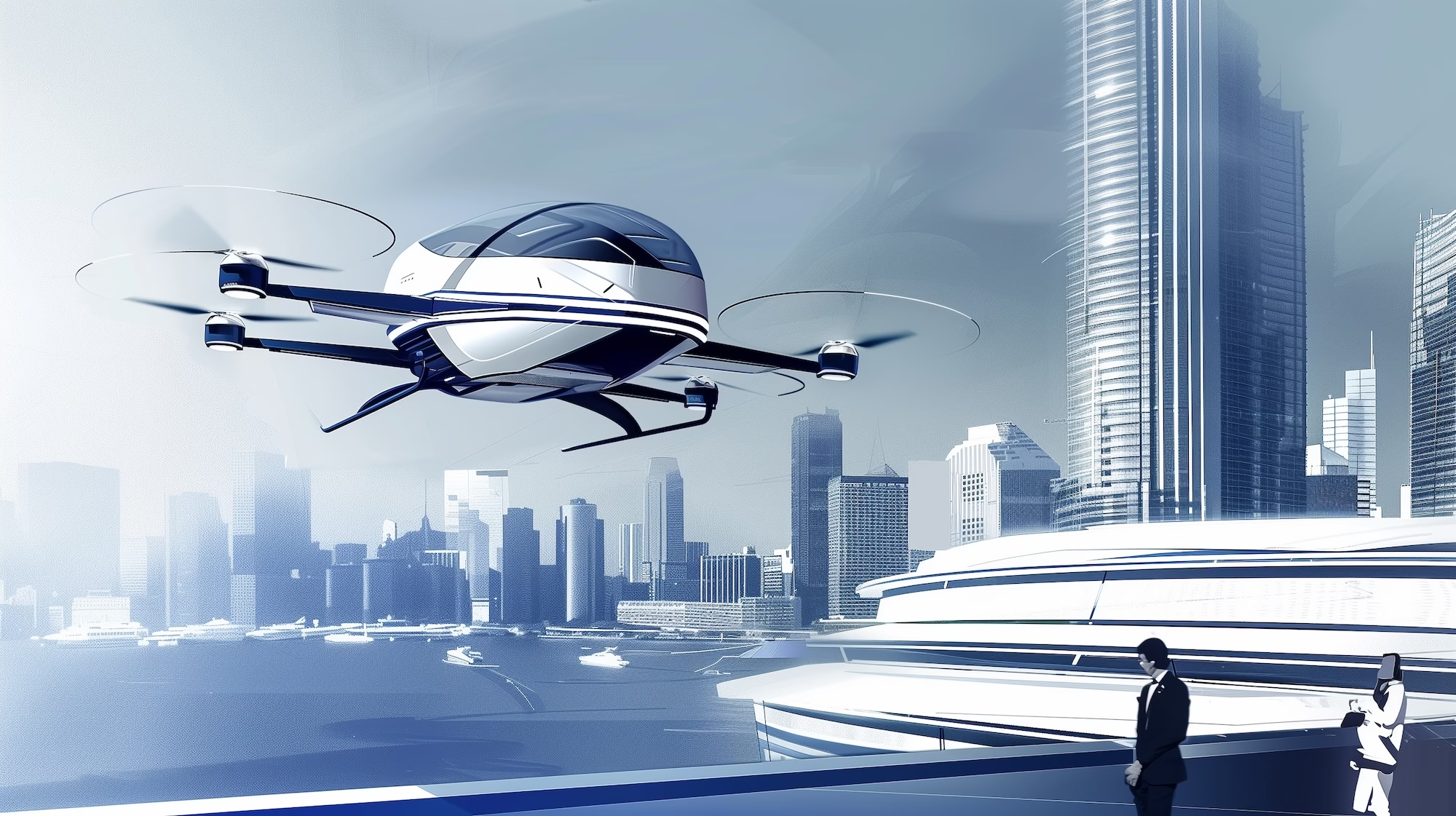
We are writing the year 2034. Endless traffic jams plague most densely populated urban areas. Those who can afford it jump the congestion and soar through the sky in eVTOLs – electric vertical take-off and landing vehicles. Owing to its electric drive, this form of transportation provides a sustainable solution for personal mobility within urban agglomerations. Its biggest benefit: Time. Bypassing traffic and spending less time en route means gaining more time for what truly matters – enjoying quality moments with family and friends, indulging in extraordinary experiences, nurturing business relationships.
As promising as this future scenario sounds, it remains uncharted territory that needs to stand its test against users. After all, it is the users who decide whether a new concept survives. If it offers value to them, users will adopt it, return as regular customers, and may even recommend it to others.
In this article we apply the methodology of User Centered Design to vertiports, thoroughly examining this new concept from a radically user-centered perspective. By combining expertise in passenger and airport experience design with intuition, we model a likely profile of vertiport users and envision how the service experience might unfold.
User Centered Design (UCD) is the practice of creating products and services that are attractive, valuable, and pleasant to use. It is a research methodology to understand user characteristics, the usage situation, and goals of the service provider. And it is a design methodology, tailoring solutions to the needs of a specific target group, resulting in offers with real value for them. The outcome has a better product-market fit, which leads to a higher adoption rate, increased customer loyalty, and a greater willingness to recommend, all of which translate into increased revenue. Companies like AirBnB, Nike, and Apple commonly apply UCD, and numerous studies have shown its positive impact on revenue.
For vertiports/eVTOLs, UCD is especially valuable, as this new mobility concept represent a significant departure from traditional air travel infrastructure. UCD encourages innovative thinking which is needed by the non-traditional players who often conceive these new aviation infrastructures.
To apply a user-centered perspective to vertiports, we need to make some assumptions about their operation and user base.
In order to successfully apply a user-centered approach and thus reap its benefits, a number of principles must be followed. In the following section we take a closer look at these principles.
User understanding is built on first-hand research with real customers applying tools like personal interviews, behavior observation, and accompanied walk-throughs. However, as there are currently very few vertiports in operation, we are forced to draw conclusions from concept descriptions and build on our experience with other aviation projects in order to make assumptions about user needs, goals, and habits.
As stated before, we assume primary users will be those who are able to afford such a service. For simplicity’s sake we focus on two user groups: Senior Business Executives and Private Luxury Travelers.
Senior Business Executives travel frequently to strengthen business relationships, attend meetings, and close deals. With a tightly planned schedule time is a valuable resource for them. Any service that saves it while helping them keep their performance levels high is desirable.
Private Luxury Travelers seek extraordinary experiences and enjoy time with friends and family, valuing exclusivity, comfort, and convenience. They are willing to pay a premium for services that enhance their travel experience, expecting unparalleled luxury and privacy. order to make assumptions about user needs, goals, and habits.
These groups likely value the convenience and exclusivity of vertiports and eVTOL flying, expecting high service levels shaped by premium hospitality and travel experiences.
Based on these user characteristics we are proposing the following design strategy for user-centered vertiports: Create a service that significantly shortens travel time, while providing throughout the entire journey the highest level of comfort and privacy with an explicit human touch.
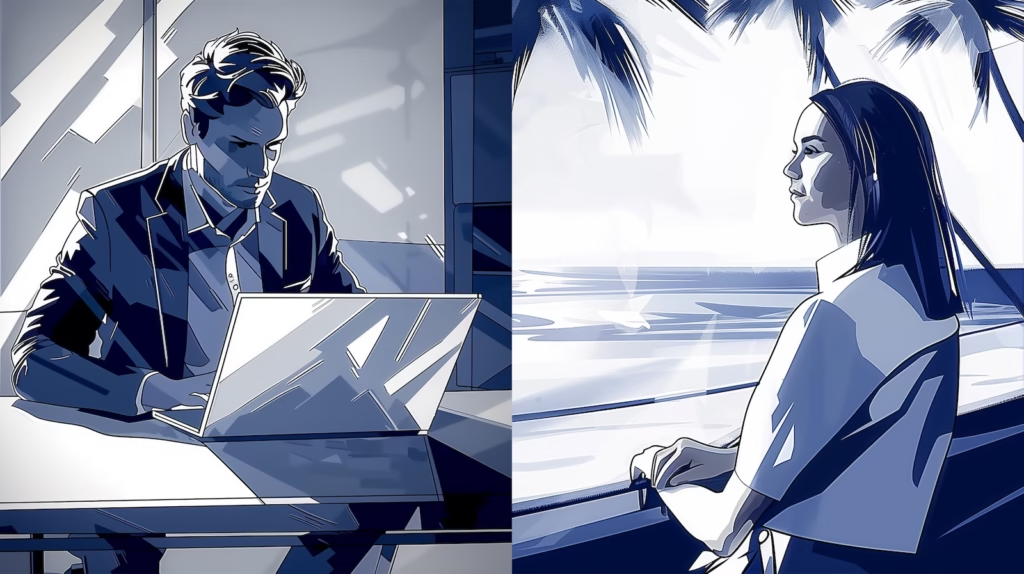
Theodore Levitt, renowned former dean of marketing at Harvard Business School, stressed that to create committed buyers, the main task of companies is not to make products, but to deliver value to customers, a subtle but notable distinction.
In this sense it’s essential to think beyond the vertiport premises and address the entire problem domain regarding “short urban travel for senior executives and luxury travelers”. This means fully owning the customer problem in all its aspects, and from beginning to end. Every element and touchpoint of the travel experience needs consideration: efficient and pleasant vertiport experiences, but also communication beforehand, and quick, comfortable transportation to and from the vertiport.
People experience their world with all their senses, across time, and as actors in their own story. Thus, delivering a great user experience requires a multidisciplinary, holistic approach to design. In each step it’s about weaving together all the elements that work towards the goal of a convincing narrative.
This includes the physical environment, employee behaviors, processes, analog and digital services, complementary commercial offerings, as well as communication. Each part must align to support the overall goal, as even one failing can ruin the entire impression. Just imagine a luxurious travel experience supported by beautifully designed digital tools – undermined by unfriendly staff!
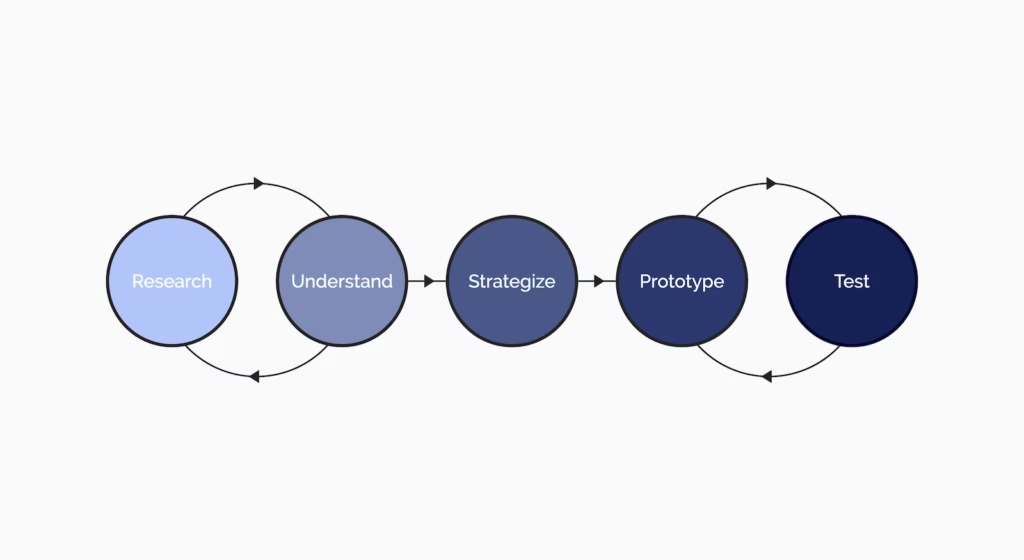
Despite a thorough design process, not everything can be anticipated, especially with a novel product like vertiports. Hence it is essential to apply a build-test-learn approach. In this iterative cycle the existing design or prototype is tested with users and is fine-tuned based on their feedback.
Tesla takes such an approach: Its updates to vehicle performance and user experience are grounded in continuously collected data and user insights. Vertiport operators for example could regularly accompany users along the entire experience, observing their interactions and asking questions in real-time. This method allows to gather rich, contextual data on user behaviors, needs, and pain points to further evolve solutions.
Combining expertise with intuition, we propose a hypothetical passenger experience for vertiport user. The goal is to illustrate the power of a user-centered design process. This experience adheres to our design principle: Significantly shorten travel time while providing throughout the entire journey the highest level of comfort and privacy with an explicit human touch. Keep in mind that it is based on above mentioned assumptions, and that different assumptions and target groups would lead to a different experience. Let’s have a look!
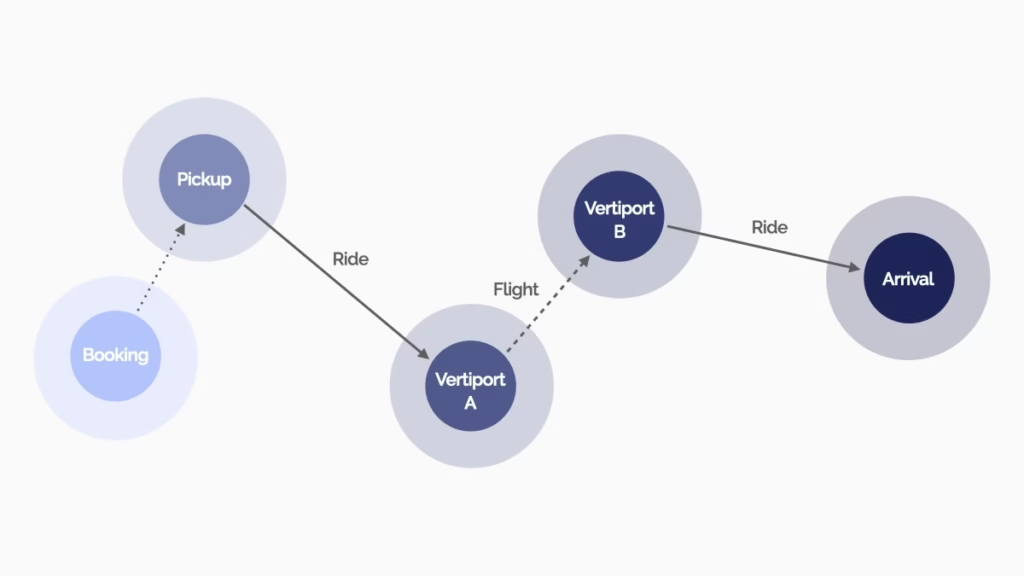
The user journey begins with a click on the app. The Senior Executive’s trusted assistant books the trip with ‘SkySwift’ for his superior, a colleague, and herself, entering all necessary information, uploading documents, and syncing it with her travel calendar. Throughout the trip, the app will provide polite and timely updates and notifications to all travelers, ensuring they are well-informed and worry-free.
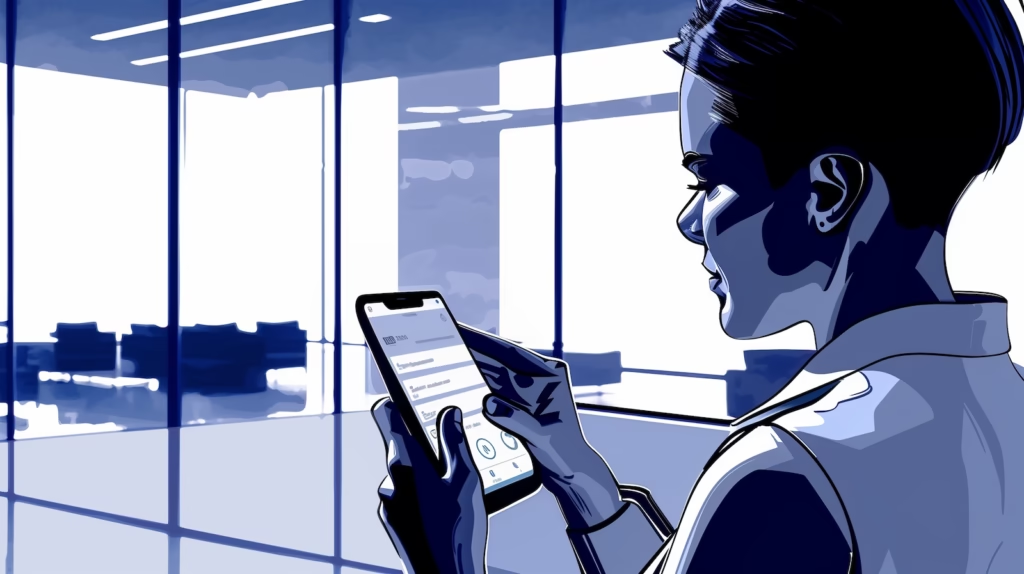
Three hours before the flight, SkySwift’s concierge contacts the travelers with a voice full of professionalism yet warm assurance. She confirms the flight, notes the pickup location, and addresses any special requests. She announces that the limousine will pick up the group exactly 50 minutes before the scheduled flight, allowing time to navigate traffic to the Bezos Tower vertiport.
A gentle notification prompts the group to meet the limousine in front of the office. Upon entering the car, the driver, embodying 5-star courtesy and efficiency, verifies the passengers in the app, tags and scans their luggage, and stows it in the trunk. SkySwift manages the luggage until the very end of the journey.

After a short video conference in the privacy of the limousine cabin, the travelers enjoy a gourmet sandwich and relax during the remaining ride to the vertiport. After all, most of the tedious steps airtravel usually brings with it are already done.
In the parking garage of the Bezos Tower, the limousine stops at SkySwift’s dedicated elevator, taking the group to the 57th floor. They are greeted by their personal concierge, who offers her undivided attention throughout their stay at SkySwift’s premises. Yet this stay will be very short, as she immediately guides the group through a security gate that seamlessly integrates the checking process into their path to the eVTOL.
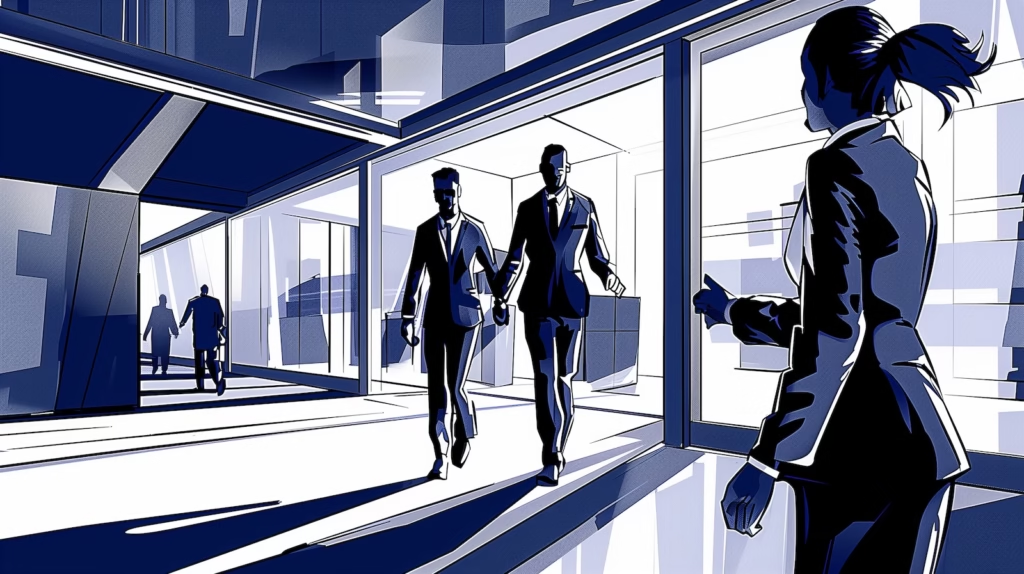
At SkySwift, aircrafts depart every 15 minutes. Most travelers enjoy the just-in-time service, walking directly to the aircraft. Only some with connecting flight or the desire to pass some extra time in luxury use one of the few comfortable private lounges with workstations and washroom, or take a drink at the stylish SkyBar.
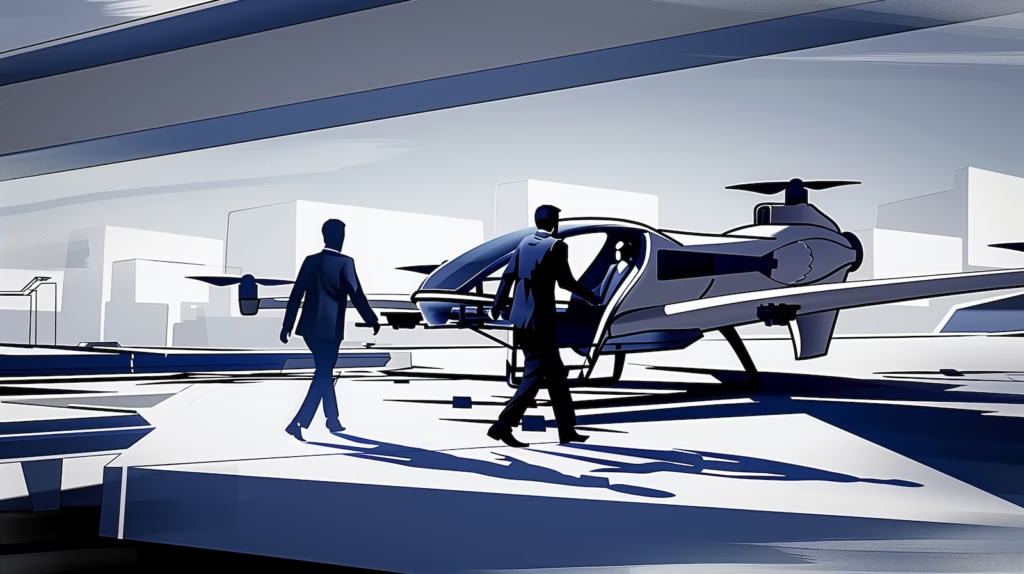
After a 20-minute flight to the OpenAI Campus, the journey concludes as it began: SkySwift’s own elevator takes the group from the landing pad to the limousine, and at the end of the ride, the driver returns their luggage along with a small gift.
Although supported by our expertise, our vision of a vertiport user journey is based on assumptions about users and not, as it ideally should be, on studies of real ones. In this sense it is important to note that designing with a different user group in mind would result in a different user journey.
The purpose of our short story was to illustrate how User Centered Design helps to tailor products and services to their specific target group. It also shows how a clear design strategy brings about solutions that meet a key need consistently, in our case just-in-time-travel.
Be it for the design of the entire service, or to fine-tune an element within the service, for example the welcoming process at the vertiport or how the waiting area is designed, UCD opens the door to innovative thinking and results in solutions that fulfill user needs. If applied to vertiports, it can substantially contribute to its adoption and thus economic success.
Share: